

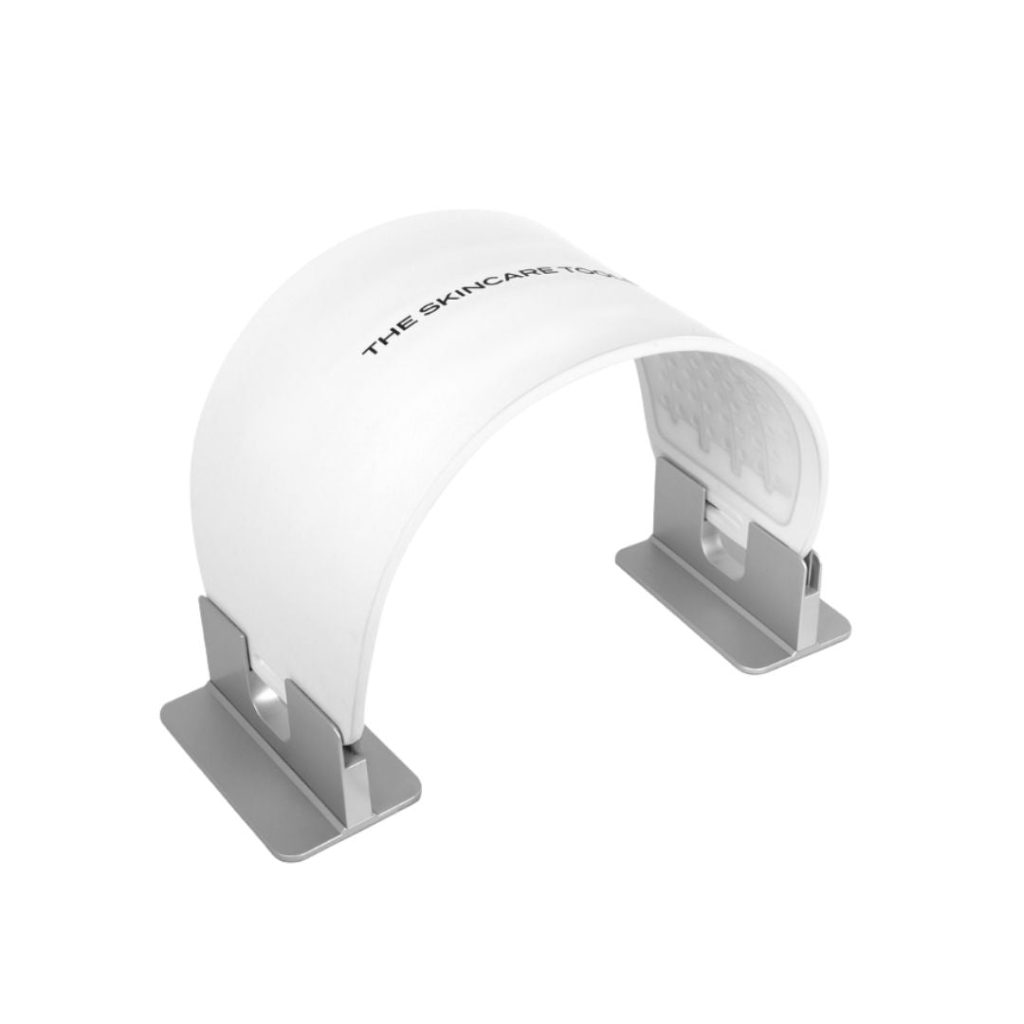
The Advanced Body Pro LED Mat from The Skincare Tools The Skincare Tools is presented as a full-body alternative to LED devices intended for a single treatment area. Its central idea is broad coverage: the maker describes a flexible mat that can be positioned against different areas of the body, with four light modes and three power levels for home use. That makes the product less about one isolated skin concern and more about building light exposure into a body-care or recovery routine.
The product page lists 240 high-intensity LED beads and 960 total light points, alongside red, near-infrared, yellow and blue wavelengths. It also describes the mat as flexible, ergonomic, waterproof, wireless and USB-rechargeable. Those specifications give a useful outline of the intended setup, but the page does not provide measurements, battery capacity, charging time or detailed output data. The following guide separates the listed features from the outcomes the seller says they are designed to support.
A mat designed around coverage
Many light-therapy products are shaped for the face or another compact area. The Advanced Body Pro LED Mat instead aims to cover larger body areas, with the product description emphasizing treatment “from head to toe.” Its 960 light points are delivered by 240 LED beads; these figures describe the device’s light layout, not how much energy reaches the skin or how evenly every position is exposed. The page characterizes the distribution as consistent and even, but does not give a treatment-area measurement or technical irradiance figures with which to compare coverage.
The mat’s flexible silicone construction is described as ergonomic and able to contour to the face, body and scalp. In practice, the page’s suggested setup is to lay it on a flat surface such as a bed, sofa or treatment table, then position the area being treated over the light-emitting section. The product is therefore described as adaptable in placement, rather than as a rigid panel that must be used in one fixed position. The supplied text does not specify its dimensions or weight, so the exact size of the area covered at one time cannot be determined from the listed information.
The seller also describes the mat as hands-free, wireless and USB-rechargeable, suggesting a setup that does not require the user to hold it in place during a session. Waterproofing is listed as a feature for use across different environments, though the supplied product information does not explain what kinds of exposure that rating covers. These are practical design details, but they do not replace the instruction to read the full user manual before use.
Four wavelengths, offered in four modes
The product combines four wavelengths: blue at 415nm, yellow at 590nm, red at 630nm and near-infrared at 850nm. Rather than presenting the wavelengths only as individual options, the mat offers four combinations: red plus near-infrared (630nm and 850nm), yellow plus near-infrared (590nm and 850nm), blue plus near-infrared (415nm and 850nm), and a full-spectrum mode that combines all four. The product page calls these targeted modes and associates them with different skin and body-care aims.
For red light, the seller describes support for skin vitality, elasticity, tone and the appearance of firmness. The page also makes claims about scalp and hair follicles, including that red light can support follicle health, prevent hair loss and encourage regrowth. These are claims made in the product information; it does not provide study references, explain which users or conditions the claims apply to, or quantify expected results. Readers should not interpret the wording as a promise of a particular outcome.
Near-infrared light at 850nm is presented as the deeper-reaching component of the system, with the seller associating it with tissue comfort, circulation and muscle recovery. The page also describes red and near-infrared wavelengths as supporting mitochondrial activity, cellular energy production and the skin’s natural renewal processes. While the product page uses this explanation to describe its rationale, it does not include supporting research details or device-specific measurements that would let readers assess those statements independently.
Yellow light at 590nm is linked on the page to circulation and lymphatic flow, and to reducing the appearance of redness and skin sensitivity. Blue light at 415nm is described as helping support clearer-looking skin by addressing excess oil and promoting a balanced skin environment; elsewhere, the page associates it with acne-causing bacteria and breakouts. These descriptions indicate the intended uses of each setting, but the supplied information does not explain how to choose among them for a specific skin concern.
The full-spectrum mode combines 415nm, 590nm, 630nm and 850nm. It may appeal to someone who wants to use the device’s complete wavelength mix rather than select one of the paired modes. The product page frames the combination as supporting multiple skin concerns, but it does not state that every mode should be used in every session, or provide a mode-by-mode schedule. For that reason, the seller’s manual is the appropriate source for operating guidance beyond the brief instructions on the product page.
What the seller says the mat is intended to support
The page groups the Advanced Body Pro LED Mat’s intended benefits across skin appearance, circulation, muscle comfort and general wellbeing. Among the named concerns are uneven tone and pigmentation, puffiness or fluid retention, loss of firmness, fine lines and wrinkles, redness, skin stress and muscle fatigue. It also describes use for stretch marks and post-exercise recovery. This broad set of aims reflects the product’s positioning as a multi-purpose body device, rather than evidence that each outcome will occur for every user.
Some of the product language is especially strong: the description calls the system “clinically proven” and says its wavelengths are clinically studied. However, the supplied page text does not identify particular clinical studies, their methods, or the conditions under which they were conducted. It is therefore possible to report that the seller makes these claims, but not to assess their evidence from the information provided. The page also does not specify a timeframe for visible changes or a way to measure an individual response.
That distinction matters when considering a device with several proposed applications. The product’s listed hardware and modes are concrete features; statements about reducing inflammation, promoting tissue repair, improving mood or reducing hair loss are outcome claims. The page includes those claims, but supplies no detail that would establish an expected result or show how the mat compares with other forms of care. The product should not be treated as a substitute for individualized medical advice on a health concern.
How the product page suggests using it
The seller’s basic instructions begin with clean skin, free of heavy lotions or oils, and placement of the mat on a flat surface. The user then lies or positions themselves so the intended treatment area aligns with the light-emitting area, selects a colour mode and one of the three intensity levels using the control panel, and remains under the mat for 15 to 30 minutes. The page says the duration depends on skin goals, but does not map a particular time or power level to each mode or concern.
The recommended frequency listed is three to five times per week, and the page also says the device is safe for daily use. Since those are the maker’s directions, users should consult the full manual for any qualifications, precautions or instructions not reproduced in the product listing. The page says to use glasses as needed but does not give more detail about when they are needed or identify eyewear specifications. It is sensible not to infer those details from the brief listing alone.
After a session, the seller says the device should be turned off. Skin may then be left bare or followed with a hydrating body serum, according to the page. It also suggests using the mat within 30 minutes after exercise to help with muscle fatigue and stiffness, and pairing a session with diaphragmatic breathing or guided meditation. These are optional routine suggestions in the product description, not requirements for operating the device.
Details to verify before building a routine
The product page provides a helpful overview of the mat’s wavelengths, modes and broad use instructions, but it leaves several practical questions unanswered in the supplied information. It does not list the device’s physical dimensions, battery capacity, charging duration, light output measurements or session-specific guidance for each setting. Nor does it explain the limits of its waterproof design. Anyone for whom those details affect placement, portability or use should consult the full user manual or the seller’s product information before relying on assumptions.
There is also a naming inconsistency in the supplied page text: one section refers to a “Body Radiance Pro LED Mat,” while the page title and main description identify the product as the “Advanced Body Pro LED Mat.” The text does not explain whether the alternate wording is a reference to the same device or an editing error. The principal specifications discussed here are those presented alongside the Advanced Body Pro name, but the discrepancy is worth noting when checking that instructions and product details apply to the specific mat.
At its core, the Advanced Body Pro LED Mat is a flexible, rechargeable LED system intended to make multi-wavelength light sessions available across larger body areas at home. Its defining features are the 240-bead, 960-light-point layout, four wavelength combinations, three adjustable power levels and a suggested 15-to-30-minute routine. The product page presents possible uses ranging from skin appearance to muscle recovery, while leaving scientific references and some technical measurements unspecified. Understanding both sides—the tangible design details and the limits of the available claims—offers a grounded way to decide whether its full-body format fits an existing personal-care routine.
Get all details about The Skincare Tools
Sponsored by Gabal Global Group, with publishing tools from CheapPlugins.